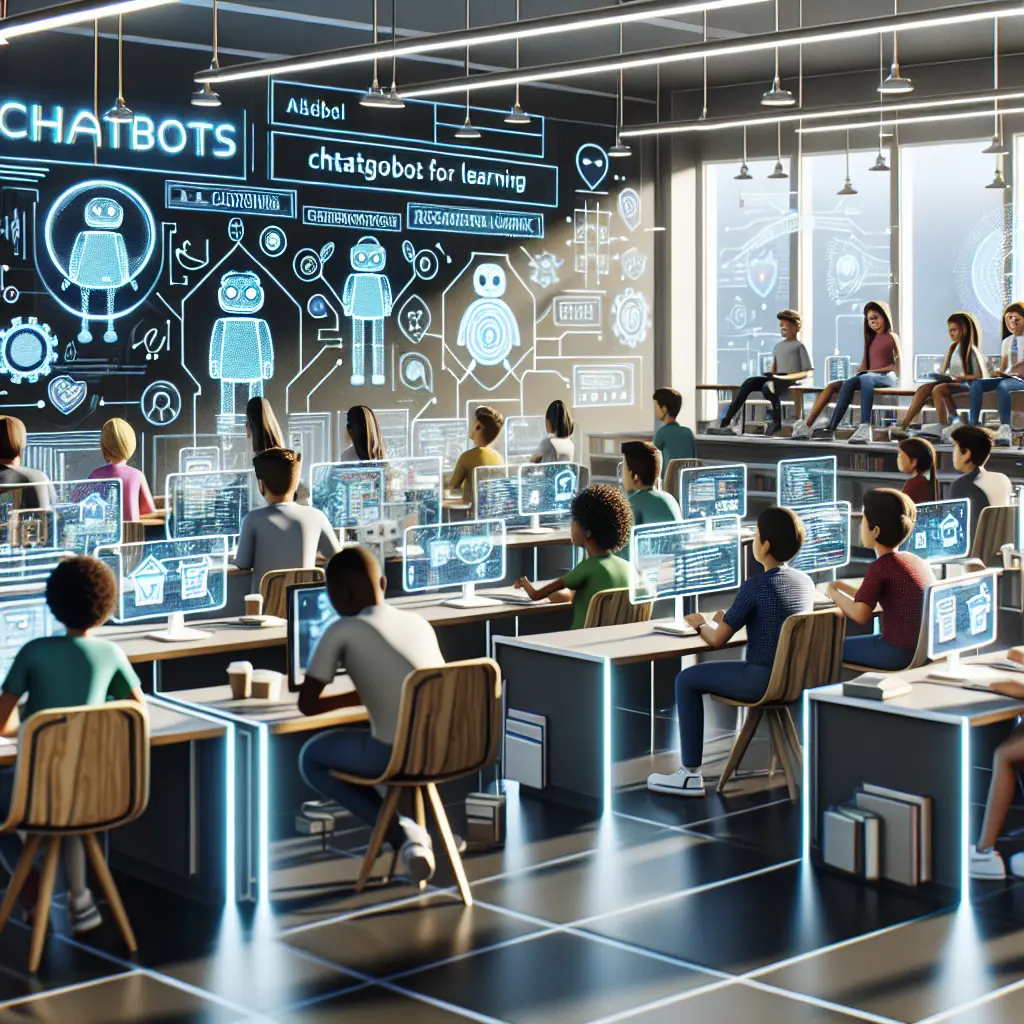
Revolutionizing Student Engagement with Chatbots in Education
In today's rapidly evolving digital landscape, educational technology is at the forefront of transforming how students learn and interact within the academic environment. Among the most innovative advancements is the integration of chatbots in education, revolutionizing student engagement and communication. These AI-driven education solutions serve as dynamic digital learning assistants, offering a myriad of benefits that enhance the educational experience for students.
The Evolution of Educational Technology
The future of education technology hinges on the successful adoption of such cutting-edge innovations. Chatbots provide personalized learning experiences, tailoring content to individual student needs, and fostering a more interactive learning environment. The potential to transform traditional classrooms through chatbot integration is vast, creating more engaging and immersive learning atmospheres.
A prime example of this evolution can be seen in OpenAI's recent endeavors. As reported by The Verge, OpenAI has expanded into the search domain with "SearchGPT," a direct challenge to Google. This development underscores the broader trend of AI technologies branching into diverse areas, including education, to provide more robust and intelligent solutions.
Enhancing Student Interaction and Engagement
Chatbots serve as interactive learning tools that significantly enhance student interaction. By providing immediate feedback, guidance, and support, they improve communication between students and educators. This is particularly crucial as virtual learning support becomes a cornerstone of modern education.
Consider the insights shared by Replika's CEO, Eugenia Kuyda, in an interview with Nilay Patel at The Verge. Kuyda discusses the profound impact AI can have on personal interactions, suggesting that similar empathetic approaches could revolutionize student engagement in educational settings. Such AI-driven education solutions hold the potential to transform not just how students learn but how they feel supported throughout their educational journey.
Addressing Challenges in AI-Driven Education Solutions
While the benefits are clear, challenges remain. One notable concern is the phenomenon of "botshit," where chatbots provide incorrect information or make unfounded claims. As described by TechCrunch, this issue highlights the need for continuous improvement in AI models to ensure accuracy and reliability in educational contexts.
Furthermore, the risk of "AI inbreeding," as discussed in VentureBeat, poses a threat to the long-term viability of chatbots like ChatGPT. This concept refers to the potential stagnation and degradation of AI quality if models are overly reliant on their own generated data without incorporating diverse external inputs. Addressing these challenges is crucial for sustaining the revolutionizing impact of AI in education.
Real-World Applications and Case Studies
Several educational institutions have already begun implementing chatbots to improve student engagement. For instance, Georgia State University successfully used a chatbot to guide incoming students through enrollment processes. This initiative resulted in a significant increase in student retention rates, demonstrating the tangible benefits of chatbot integration in classrooms.
Moreover, Google's recent advances, as reported by Wired, showcase how combining large language models with self-learning AI can address some shortcomings in current AI systems. Such developments promise to enhance the efficacy of chatbots as educational tools, offering more reliable and informed interactions with students.
Future Prospects for AI in Education
As we look toward the future, it's clear that chatbots will become integral components of the educational ecosystem. They offer unprecedented opportunities for enhancing student interaction and promoting continuous learning cultures. The ability to deliver personalized learning experiences tailored to diverse learning styles will make education more accessible and enjoyable for students worldwide.
Meta's recent shift away from celebrity AI chatbots towards its new AI Studio, as detailed by Business Insider, further emphasizes the evolving landscape of AI in education. By empowering users to create their own AI bots, Meta is fostering a culture of innovation and customization that aligns with the needs of modern learners.
Conclusion: Embracing the Future of Education with AI
As we navigate the transformative landscape of education, the integration of chatbots emerges as a pivotal innovation reshaping student engagement. This evolution is characterized by several key developments:
- Personalized Learning: Chatbots offer tailored educational experiences that cater to individual student needs, fostering a more interactive and immersive learning environment.
- Enhanced Interaction: By providing immediate feedback and support, chatbots enhance communication between students and educators, crucial for effective virtual learning.
- Real-World Applications: Successful implementations, like Georgia State University's enrollment chatbot, highlight tangible benefits such as increased student retention rates.
- Addressing Challenges: Despite their potential, challenges like misinformation ("botshit") and "AI inbreeding" must be addressed to ensure accuracy and sustainability in educational contexts.
Looking forward, the role of chatbots in education will undoubtedly expand. Their ability to create personalized learning pathways promises to make education more accessible and enjoyable for students globally. As technology continues to evolve, the focus must remain on refining these tools to overcome current limitations and maximize their positive impact.
Educators and technologists are encouraged to explore how they can leverage these advancements to create a more engaging and inclusive learning environment. By doing so, they can contribute to a future where education is not only more effective but also deeply fulfilling for learners.
I invite you, dear readers, to share your thoughts and experiences with AI in education. How have you seen chatbots impact learning environments? Your insights could spark valuable discussions and further innovation in this exciting field.
Warm regards,
Abigail Winters